Good photos sell clothes. Here's how to photograph clothes to sell online with just your phone — light, backgrounds, angles, and the shots buyers want.
If you're wondering how to photograph clothes to sell online, the short answer is this: shoot near a bright window in daylight, put the item on a plain background, keep it wrinkle-free, and take five core shots (front, back, detail, tag, and any flaws). You don't need a camera, a ring light, or a studio. A phone, a window, and ten minutes of setup will get you listing photos that look better than most of what's already out there.
Below is the exact phone-only process we'd walk a friend through, from light to angles to honest flaw photos.
Why photos matter more than the description
On Depop, eBay, Poshmark, and Vinted, shoppers scroll a grid of thumbnails. Your first photo is effectively your whole ad. If it's dark, cluttered, or crumpled, most people never tap through to read the description you worked on.
Photos also do the job a fitting room would do in a store. Buyers can't touch the fabric or hold it up to the light, so they're looking for proof: is the color accurate, is the fabric pilled, does it actually look like the brand says? Clear photos answer those questions before they're asked, which means fewer messages, faster sales, and fewer returns.
That's also why prep comes first. A freshly washed, steamed piece photographs dramatically better than one pulled straight from a drawer. If you haven't prepped yet, start with our guide on how to prepare clothes for consignment.
Light: use windows, not flash
Light is the single biggest upgrade you can make, and it's free. Set up next to a large window during the day, ideally with the sun not shining directly through it. Bright, indirect daylight (an overcast day is perfect) gives soft shadows and true-to-life colors.
A few rules that make a big difference:
- Turn off the flash. It flattens texture, creates glare on shiny fabrics, and throws harsh shadows.
- Turn off overhead lights. Mixing warm indoor bulbs with daylight gives clothes a yellow or orange cast, and color that doesn't match the photo is one of the most common reasons buyers send items back.
- Face the window, or stand beside it. Light should fall on the item, not come from behind it. Shooting toward a window turns the garment into a dark silhouette.
- Tap to focus and nudge exposure. On most phones, tapping the item sets focus, and sliding up or down adjusts brightness. Aim for bright but not washed out; you should still see texture in white fabric.
If you only have one decent window, use it at the same time of day for every listing. Consistent light makes your whole closet look more trustworthy.
Backgrounds and flat lays vs. hangers
Keep the background plain and neutral so the clothing is the only thing to look at. A white or light gray wall, a clean bedsheet, a light wood floor, or a sheet of poster board all work. Avoid busy bedspreads, piles of laundry, or anything with a pattern.
Then pick a style and stick with it. Here's how the three common options compare:
| Style | Best for | Pros | Watch out for |
|---|---|---|---|
| Flat lay | Tees, sweaters, jeans, kids' clothes | Easiest to keep consistent; shows the full shape | Shoot from directly above, or the item looks warped |
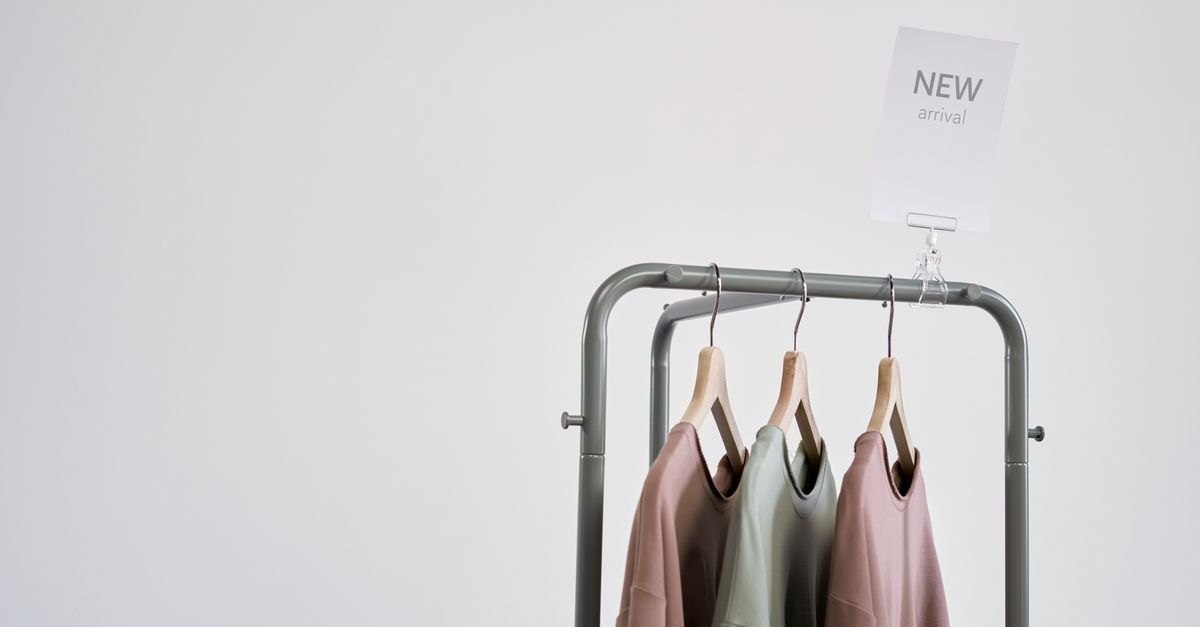
| Hanger | Dresses, coats, blouses, anything with drape | Shows how fabric hangs; quick to set up | Use a plain hanger against a plain wall |
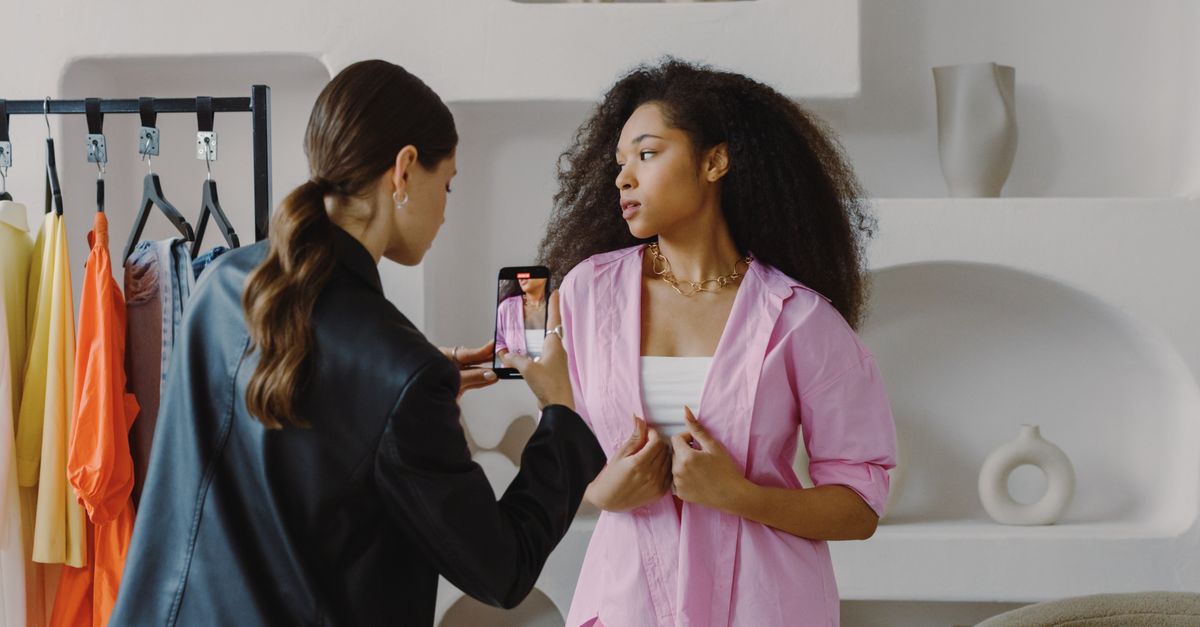
| Worn (on a person) | Fitted pieces, activewear, statement items | Helps buyers picture fit and size | Needs good light and a tidy background; crop out faces if you prefer |
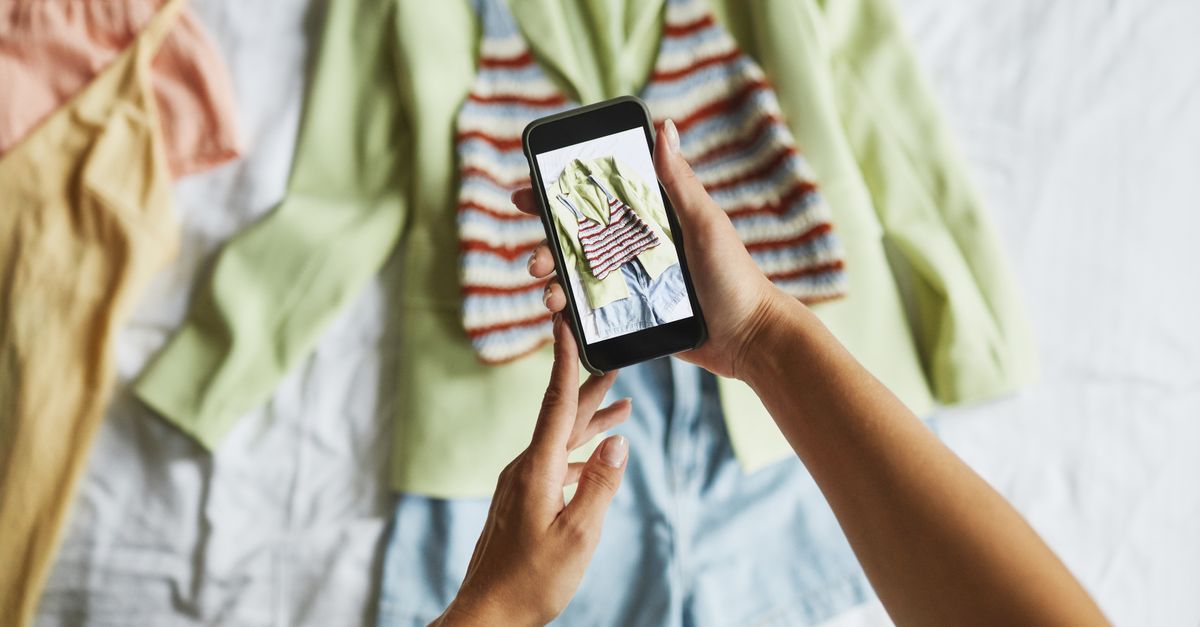
For flat lays, stand on a sturdy chair or hold your phone straight above the item so the lens is parallel to the floor. Smooth out every fold and tuck sleeves in naturally. For hangers, hang the item against a wall rather than a closet door covered in clutter.
The five shots every listing needs
Most platforms let you upload many photos, but these five should be in every clothing listing:
- Full front. Your cover photo. Center the item, fill most of the frame, and keep it straight. This is the one that shows up in search results.
- Full back. Buyers want to see the back just as much, especially for jackets, graphic tees, and anything with pockets or details.
- Close-up detail. Fabric texture, stitching, buttons, embroidery, a print. This shows quality and helps with color accuracy.
- Brand and size tag. One clear shot of the label, including the size. It answers the two questions buyers ask most, and it helps authenticate better brands.
- Flaws (if any). More on this below. If there are none, a care or fabric-content tag is a useful fifth shot.
Nice-to-haves include a side view for shoes and bags, a photo with the item worn to show fit, and a measurement shot with a tape measure laid across the chest or waist. Measurements save a lot of back-and-forth and reduce "it didn't fit" returns.
Keep the frame vertical or square to match how apps display images, and wipe your phone's lens before you start. A smudged lens is one of the most common reasons phone photos look hazy.
Showing flaws honestly
It can feel counterintuitive, but photographing flaws usually helps an item sell. A buyer who sees a small snag up close, with the rest of the piece in great shape, knows exactly what they're getting. A buyer who discovers an unmentioned stain after it arrives files a return, and a return means no sale.
Take flaws in the same good light, close enough to see clearly, and consider putting a fingertip or coin next to the spot for scale. Then mention it plainly in the description: "small pull on the left sleeve, shown in photo 6."
Be realistic about what's worth listing, too. Minor wear on a quality piece is fine to disclose and sell. Large stains, holes, heavy pilling, or stretched-out fabric usually aren't worth the effort, and those are better donated or recycled. Our guide to what clothes sell best for resale can help you sort the keepers from the donate pile.
When it's easier to let someone else do it
Photographing one or two pieces is fun. Photographing forty, writing listings for each, answering messages, and shipping every sale is a part-time job. That's the point where a lot of closet cleanouts stall.
If that sounds familiar, consignment is the easy route. At Ada's Closet, a student-run consignment shop at Spring Arbor University, our team photographs, prices, and lists your clothes on Depop, eBay, Poshmark, and Vinted for you, usually within about a week. You keep 50% of every sale, paid by Venmo or CashApp, and it's free to start. We're at 106 E Main St in Spring Arbor, and we offer pickup in the Spring Arbor and Jackson area for a small fee. Anything that doesn't sell is returned to you or donated.
Not sure which route fits you? Our comparison of consignment vs. selling yourself lays out the time and money on both sides.
Either way, the photo basics above will serve you well: window light, plain background, five core shots, honest flaws. And if you'd rather skip straight to the payout, you can start consigning with Ada's Closet today.